
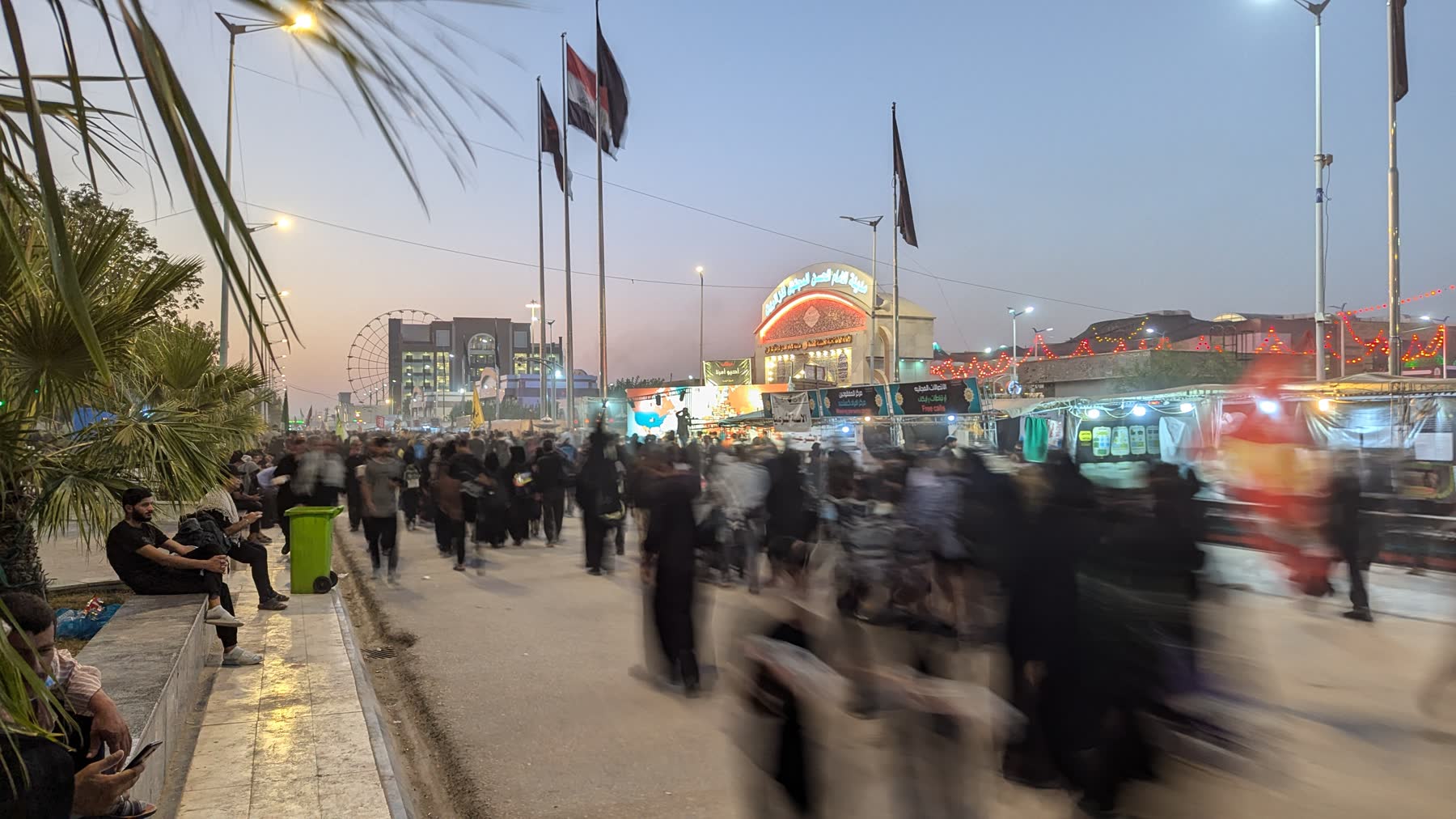
Photo: 50 Difficult Places archive
Middle East
Arba'een
Najaf to Karbala on foot: millions of pilgrims, thousands of volunteer food stalls, free places to sleep, black flags, heat, dust, road closures, chanting, generosity, and one of the most intense religious journeys on earth.
Plan it right
Before you book the flight
Quick checks that decide whether a Arba'een trip actually works on your dates.
Find it on the map
Open Arba'een in Google Maps and drop a pin on your base before you lose signal.
Open in Google MapsCheck the visa policy
Rules for Iraq change with your nationality and current advisories. Confirm before booking anything.
Read entry rulesGet help with a visa
A reputable visa service can handle paperwork and invitation letters if you'd rather not deal with the consulate.
Compare servicesWhen to go
Best: The 4 to 7 days before Arba'een day. The route is usually walked in the days before 20 Safar. In hot years, night walking and long midday rests are more realistic than treating it as a daytime trek.
Avoid: Arriving at the last moment; trying to leave Karbala during peak closures; walking through the hottest hours in July, August, or early September.
Arba’een is not really a destination. It is an event, a route, and a temporary human system that appears across southern Iraq every year, then disappears again.
Next Arba’een date
Tuesday, 4 August 2026 - expected date, subject to local moon-sighting.
Arba’een is observed on 20 Safar. Some Hijri calendar sources map 20 Safar 1448 to 3 August 2026, while others list 4 August 2026, so for travel planning I would treat 3 to 4 August 2026 as the key window and plan to arrive in Najaf several days before then.
How many people attend Arba’een?
Typically, around 20 to 22 million people attend or complete the Arba’een pilgrimage in Karbala in recent years.
Typical attendance: around 20 million pilgrims, with recent official and media estimates often in the 21 to 22 million range. Not all of these people walk the full Najaf-Karbala route; many arrive by road, bus, taxi, or from other Iraqi cities.
The distinction matters:
| Measure | Better estimate |
|---|---|
| People in Karbala for Arba’een | 20 to 22 million |
| Foreign pilgrims | Often several million |
| People who walk at least part of the route | Many millions |
| People who complete the full Najaf-Karbala walk | Not reliably counted |
Al Jazeera reported about 21 million pilgrims in 2023 and said the event drew about 22 million the previous year according to official figures. Religion Media Centre reported up to 21.5 million in 2024. A 2025 report citing the Imam Hussain Shrine authority put that year at more than 22 million.
Before you book the flight
Quick checks that decide whether an Arba’een trip actually works on your dates.
Confirm the date first. Arba’een falls on the 20th of Safar, 40 days after Ashura. The Gregorian date moves earlier each year and can vary slightly with moon-sighting. For 2026, most calendars place 20 Safar 1448 around 3 to 4 August 2026. Treat this as a planning date, not the final religious confirmation.
Choose your entry point. Najaf is the cleanest arrival point if flights are available and affordable. Baghdad can be cheaper, but the transfer south can become slow before Arba’een because of traffic, road controls, and pilgrimage movement.
Do not arrive on the main day. The walk is normally done before Arba’een day so that pilgrims reach Karbala in time for the main observance. A practical plan is to reach Najaf several days before the 20th of Safar and start walking when the route is fully active.
Book only the fixed nights. During the walk, food, water, and basic sleeping places are provided by mawkibs. Hotels matter more before the walk, after the walk, and for the final night in Baghdad or Najaf before flying out.
Pack for heat and simplicity. This is a walking pilgrimage, not a normal sightseeing trip. Carry little. Expect heat, crowds, dust, limited privacy, and very simple sleeping arrangements.
When to go
Best: the 4 to 7 days before Arba’een day.
Walk window: usually a few days before the 20th of Safar.
Avoid: arriving at the last moment, trying to leave Karbala during peak closures, or treating the event as a one-day visit.
In 2024 planning notes, the preferred walking start was around 15 Safar, with completion around 17 to 18 Safar. That gave enough time to walk from Najaf to Karbala and arrive before the main religious ceremonies.
The exact rhythm changes with heat. In very hot years, more people walk at night or start after dinner.
Event facts
Event: Arba’een / Ziyarat Arba’een / Najaf to Karbala Walk
Country: Iraq
Region: Middle East
Main route: Najaf to Karbala
Religious focus: Imam Hussain and the 40th day after Ashura
Main day: 20 Safar in the Hijri calendar
Time needed: 5 to 8 days for Iraq only; 7 to 10 days if you want safe buffers
Walking time: 3 to 4 days for most visitors
Route distance: Plan around the marked Najaf-Karbala walking route. Practical notes describe it as roughly 80 km by the pole system, while broader descriptions often call the pilgrimage around 100 to 120 km depending on exact start and end points.
Difficulty: Extreme
Why it is hard:
- Heat
- Huge crowds
- Road closures
- Scarce hotels
- Slow transport
- Cash-heavy logistics
- Religious etiquette
- Limited privacy and comfort
- Unpredictable exit routes
Why it is difficult
Arba’een is difficult because normal travel systems bend around the event.
The route from Najaf to Karbala becomes a moving pilgrimage corridor. Roads fill with walkers. Transport times stretch. Hotels in Najaf and Karbala become scarce or unavailable. Karbala can be hard to leave once the main closures begin. Even Baghdad can feel logistically awkward if you need to reach an early flight.
The walk itself is not technically difficult. The challenge is heat, crowds, fatigue, sleep disruption, and the need to accept a very simple routine: walk, rest, eat what is offered, sleep where space exists, then walk again.
This is also a religious event, not a spectacle. The main planning question is not “Can I see it?” but “Can I join it respectfully?”
Why it is worth experiencing
Arba’een is one of the great human journeys.
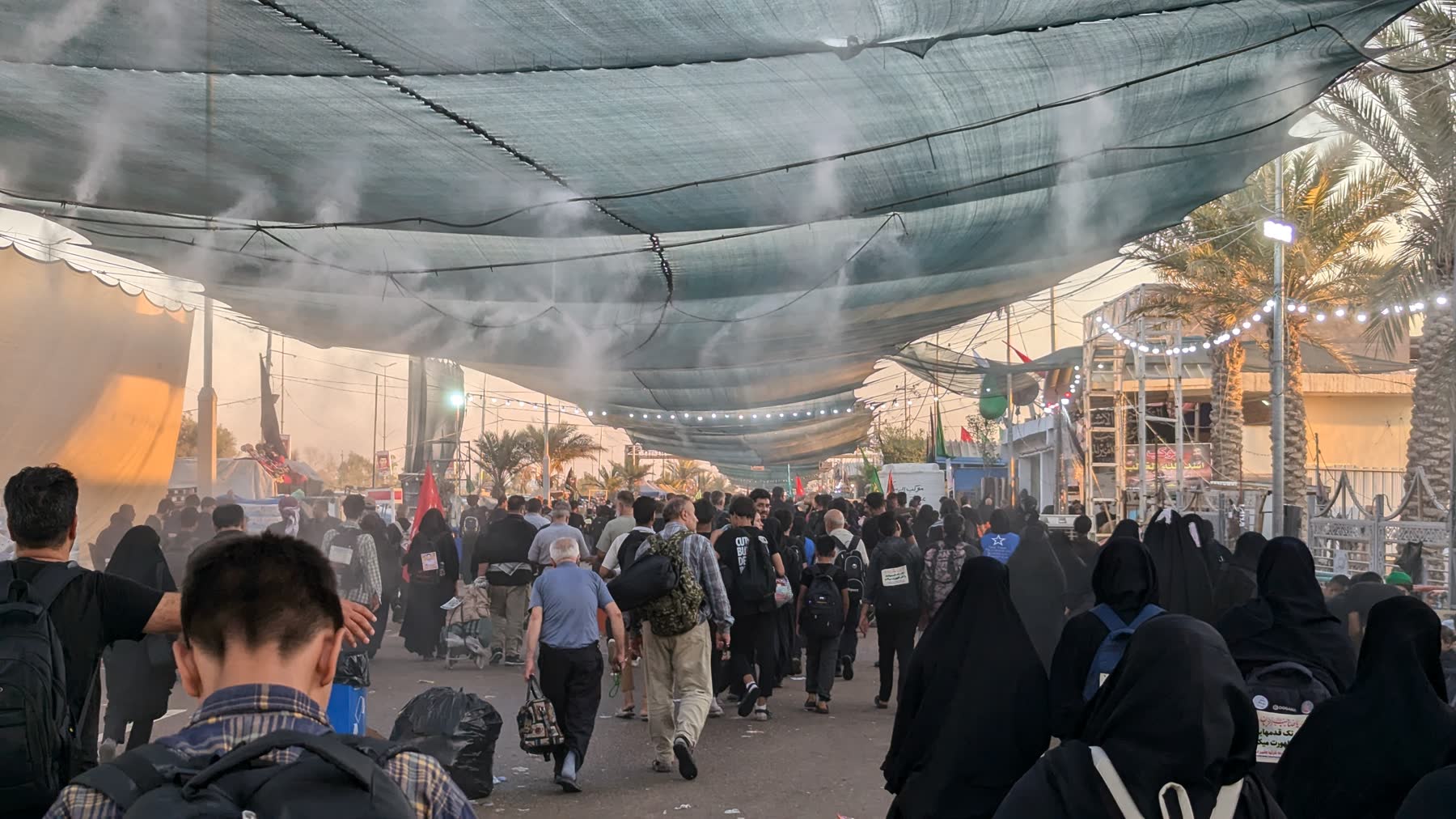
The route begins in Najaf, associated with Imam Ali, and ends in Karbala at the shrine of Imam Hussain. For Shia Muslims, it is a journey of mourning, loyalty, endurance, and remembrance. For an outsider, the scale of hospitality is hard to understand until you see it: food, tea, water, washing stations, medical help, and places to sleep offered freely by volunteers along the route.
The most striking thing is not one monument or one viewpoint. It is the temporary civilization created for pilgrims. For a few days, the road itself becomes the destination.
Practical travel notes
Route: Najaf to Karbala is the core journey. The usual symbolic start is connected with the shrine of Imam Ali in Najaf, with the walk ending at the shrine of Imam Hussain in Karbala.
Poles: The walking route is marked by numbered poles. Planning notes describe poles roughly every 50 metres, which makes progress easy to measure even without a map.
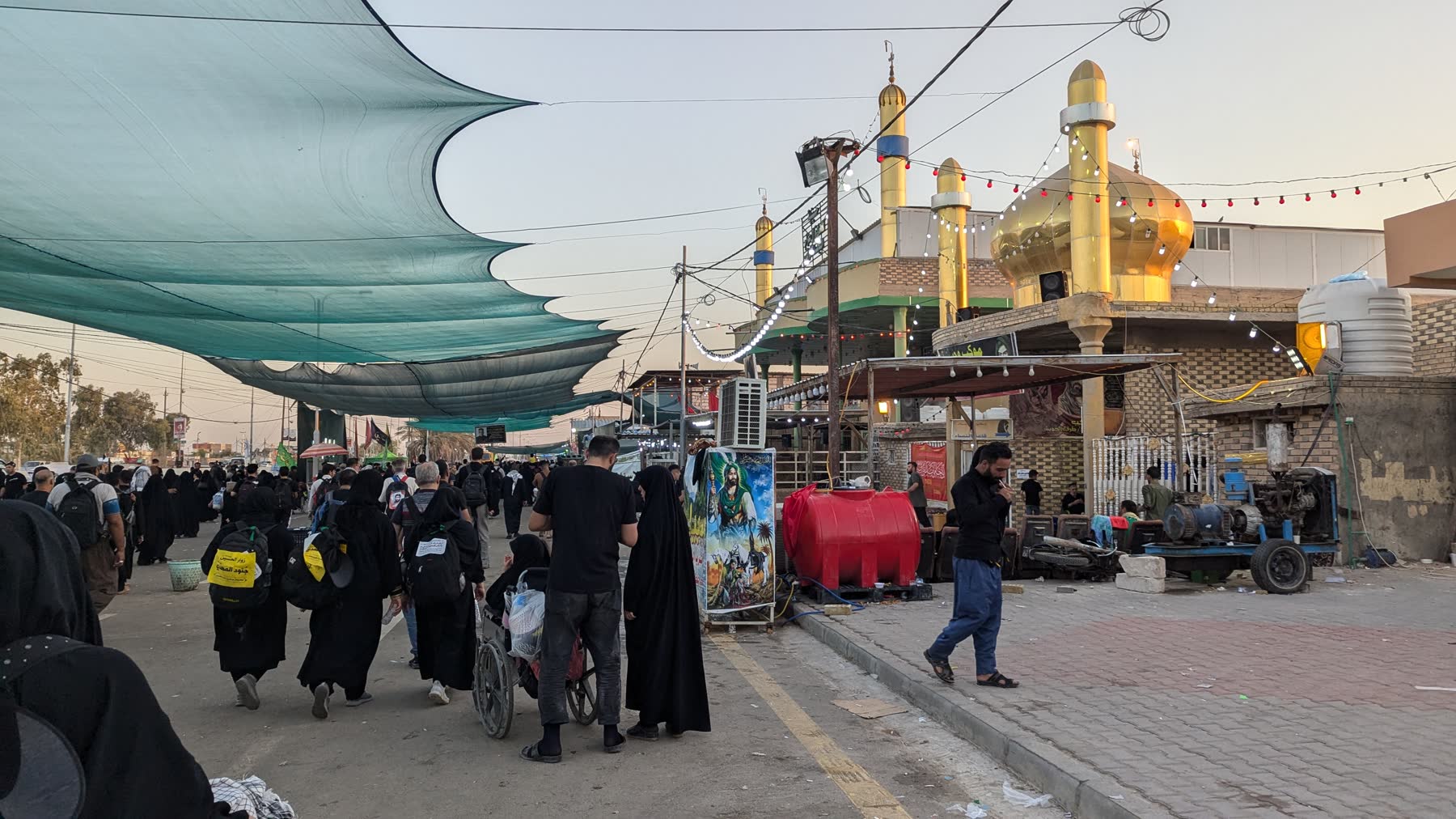
Mawkibs: Mawkibs are the volunteer stations along the route. They provide food, drinks, tea, shade, rest areas, washing facilities, and basic sleeping space. They normally appear before Arba’een and become more active as the main dates approach.
Sleeping: Do not expect normal accommodation during the walk. Many pilgrims sleep in tents, halls, courtyards, roadside rest areas, or mawkibs.
Food and water: The unusual feature of Arba’een is that pilgrims usually do not need to buy food or water during the walk. It is offered freely. Still carry emergency snacks, electrolytes, and enough water for gaps.
Clothing: Most pilgrims wear black. Dark navy or grey may also blend in. Choose loose, light, modest clothing that handles heat and dust.
Heat: August Arba’een dates are hard. The route can be brutally hot, and night walking may be more realistic than walking through the middle of the day.
Luggage: Go very light. A small daypack is enough for most of the walk. Heavy luggage becomes a problem immediately.
Cash: Iraq is cash-first for many practical travel needs. Bring enough USD or EUR to exchange, plus Iraqi dinar for taxis, hotels, food outside the pilgrimage route, and emergencies.
Language: Arabic helps, but the route is highly organized and pilgrims are used to helping each other. Save key place names in Arabic and English.
Access and logistics
Best arrival: Najaf, if the flight price and routing work. This puts you close to the start of the walk.
Cheaper arrival: Baghdad. This can work well, but the road journey to Najaf can be much slower before Arba’een than it looks on a normal map.
Exit strategy: Do not leave your exit too tight. Getting from Karbala to Baghdad or Najaf can be complicated by road closures and crowd controls. Build in at least one buffer night before an international flight.
Possible Europe routing: From Luxembourg, Brussels, Charleroi, Frankfurt, Cologne, or Paris, the practical search pattern is usually Europe to Istanbul, Amman, Beirut, Baghdad, or Najaf, then onward into Iraq. Najaf is the most direct for the pilgrimage; Baghdad is often more available.
Syria extension: Some pilgrimage routes may include Sayyidah Zainab near Damascus as a separate religious extension. Treat this as an additional specialist trip, not part of the basic Arba’een plan.
Hotels: Book fixed hotels before and after the walk. Do not rely on finding normal accommodation in Najaf or Karbala at the peak of Arba’een.
Safety considerations
Treat Arba’een as a high-density, high-friction journey. The risks are less about the walking distance and more about heat, crowd pressure, road closures, fatigue, dehydration, and being unable to move quickly when plans change.
Keep your route simple. Avoid unnecessary side trips during the peak days. Have your exit plan ready before you begin walking. Keep a charged phone, offline maps, passport copy, hotel address, flight details, and emergency cash separate from your main wallet.
Visa or permit notes
Check Iraq entry rules before booking. Visa-on-arrival availability can depend on nationality and current policy. If entering overland or via a less common route, confirm the exact border and visa rules in advance.
Do not assume that a rule found in an old traveller report still applies. For Arba’een, the date, crowd controls, and transport conditions matter almost as much as the visa itself.
Local guides, drivers and fixers
A guide is not essential for walking from Najaf to Karbala, but local help can be useful for:
- airport pickup
- Baghdad to Najaf transfer
- first night accommodation
- shrine etiquette
- leaving Karbala after the walk
- emergency rerouting
- translation
- arranging side trips
Confirm prices, route, pickup points, hotel names, and cancellation terms in writing. WhatsApp is often the practical way to arrange local services.
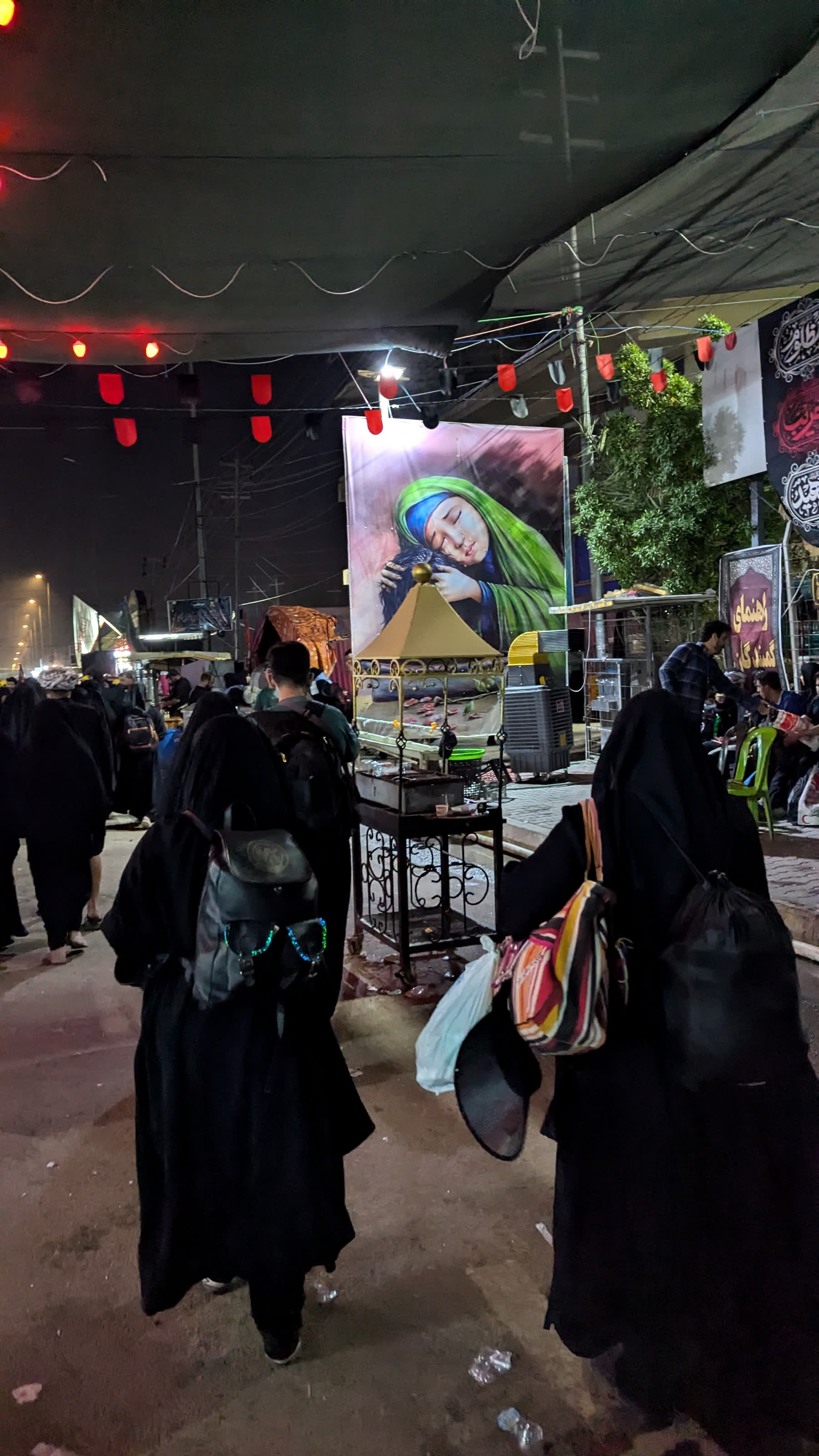
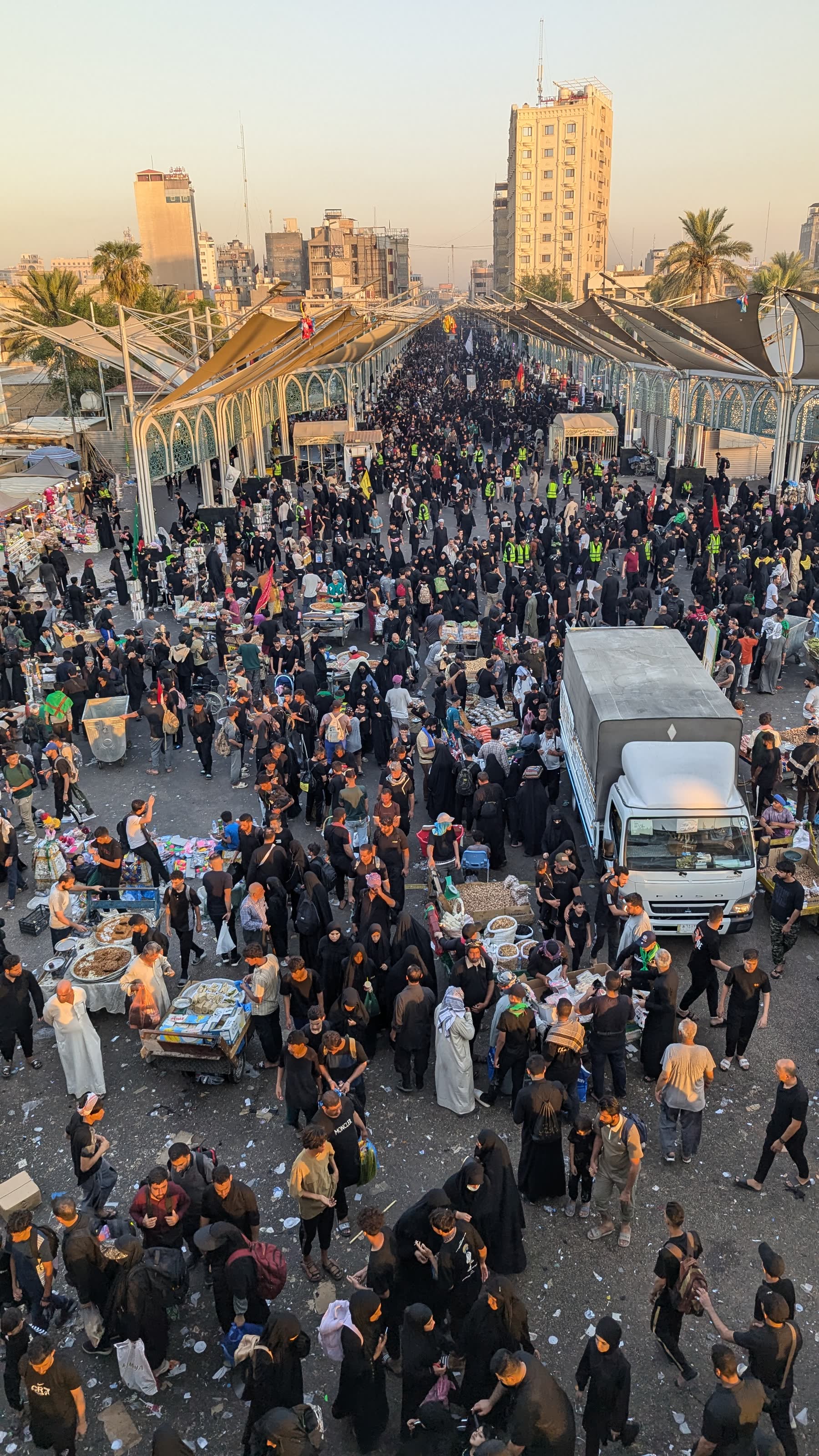
Arba’een in pictures
Use photos that show the event as a route, not just a crowd:
- pilgrims walking the Najaf-Karbala road
- black flags and shrine approach roads
- mawkibs serving tea and food
- night walking in the heat
- simple sleeping areas
- shoes, dust, water cups, and resting pilgrims
- Karbala arrival scenes
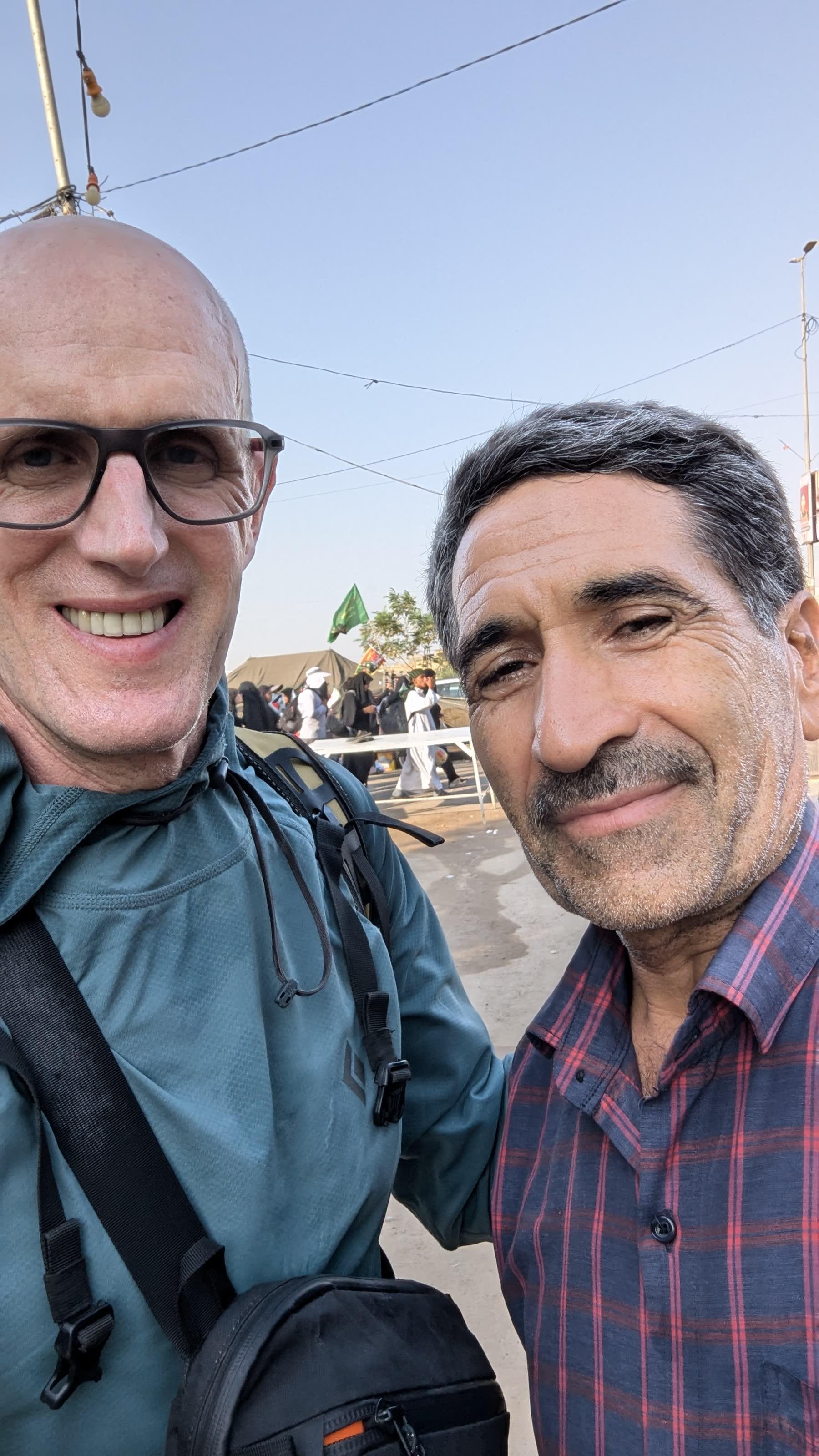
- small human details rather than only mass-crowd shots
10 practical tips
01. Start before the main day
Do not plan to “see Arba’een” only on the 20th of Safar. The experience is the walk before the main day. Arrive early enough to start from Najaf with time to reach Karbala calmly.
02. Fly to Najaf if the price is reasonable
Najaf is the most logical airport for the pilgrimage. Baghdad may be cheaper, but the saving can disappear into long transfers, road delays, and stress.
03. Keep Baghdad as your exit buffer
If flying home from Baghdad, sleep in Baghdad the night before the flight. Do not rely on same-day movement from Karbala during peak Arba’een restrictions.
04. Walk at night in hot years
When Arba’een falls in July, August, or early September, heat can dominate the trip. Consider walking after dinner, resting during the hottest hours, and treating the route as a slow endurance event.
05. Use the poles to pace yourself
The route markers make it easy to break the walk into small sections. Do not think only in kilometres. Think in poles, rest stops, and shade.
06. Accept the mawkib system
The free food and sleeping places are part of the pilgrimage. You do not need to over-plan meals during the walk, but you do need to be flexible, modest, and grateful.
07. Pack less than you think
A heavy backpack will make the walk much harder. Bring modest clothing, sun protection, basic medical items, power bank, passport security, water bottle, and very little else.
08. Dress for respect first
Black is the easiest choice. Keep clothing modest, loose, and practical. This is not the place for bright travel gear, exposed shoulders, shorts, or anything that makes you look like you are treating the event as a festival.
09. Build the trip around uncertainty
Dates can shift, transport can slow, hotels can vanish, roads can close, and crowds can change the plan. Add buffer days instead of building a tight itinerary.
10. Know why you are there
Arba’een is not a difficult-place trophy. It is a living religious commemoration. The more respectfully you approach it, the more powerful the journey becomes.
Arba’een FAQ
Can non-Muslims go to Arba’een?
Some non-Muslim visitors and travellers have experienced Arba’een, but it should be approached with humility and respect. This is a religious mourning pilgrimage, not a tourist festival.
Where does the Arba’een walk start?
The classic route starts in Najaf and ends in Karbala. The journey is associated with the shrine of Imam Ali in Najaf and the shrine of Imam Hussain in Karbala.
How long does the Najaf to Karbala walk take?
Most visitors should plan 3 to 4 days. Fast walkers may do it quicker, but heat, crowds, rest, prayer, food stops, and sleep make a slower plan more realistic.
Is there food and water on the route?
Yes. One of the defining features of Arba’een is the mawkib system: volunteer stations offering free food, tea, water, rest, and basic sleeping space. Carry emergency water and snacks anyway.
Do you need to book accommodation during the walk?
Usually no. During the walk, pilgrims often sleep in tents, halls, roadside rest areas, or mawkibs. Hotels matter before and after the walk, especially in Najaf, Karbala, and Baghdad.
What is the best airport for Arba’een?
Najaf is the most convenient airport for the start of the walk. Baghdad may offer cheaper or more frequent flights, but the road transfer can be slow around Arba’een.
How difficult is Arba’een physically?
The walking is manageable for many people, including families and older pilgrims, but the combination of heat, crowds, poor sleep, and simple conditions makes it demanding.
What should you wear?
Most pilgrims wear black. Choose modest, loose, breathable clothing. In hot years, sun protection and heat management matter as much as religious dress.
When should you leave Karbala?
Leave before the worst road closures if you need to reach a flight, or stay long enough that the peak movement has passed. The mistake is planning a tight same-day escape.
Is Arba’een a good first trip to Iraq?
It can be, but only if you are comfortable with crowds, heat, religious etiquette, simple sleeping arrangements, and uncertain logistics. For a normal Iraq sightseeing trip, choose a different date.
Photo archive
Arba'een in pictures
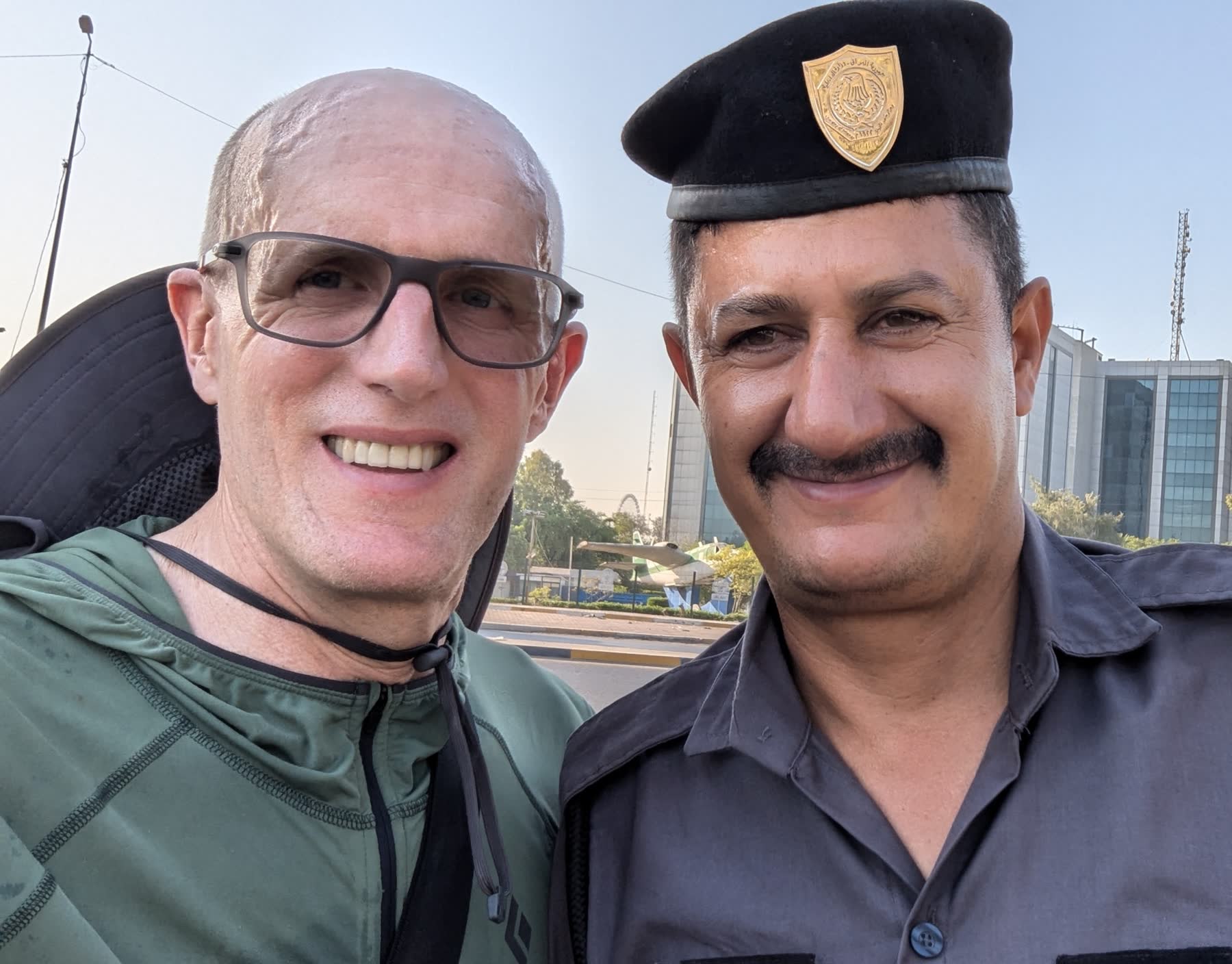
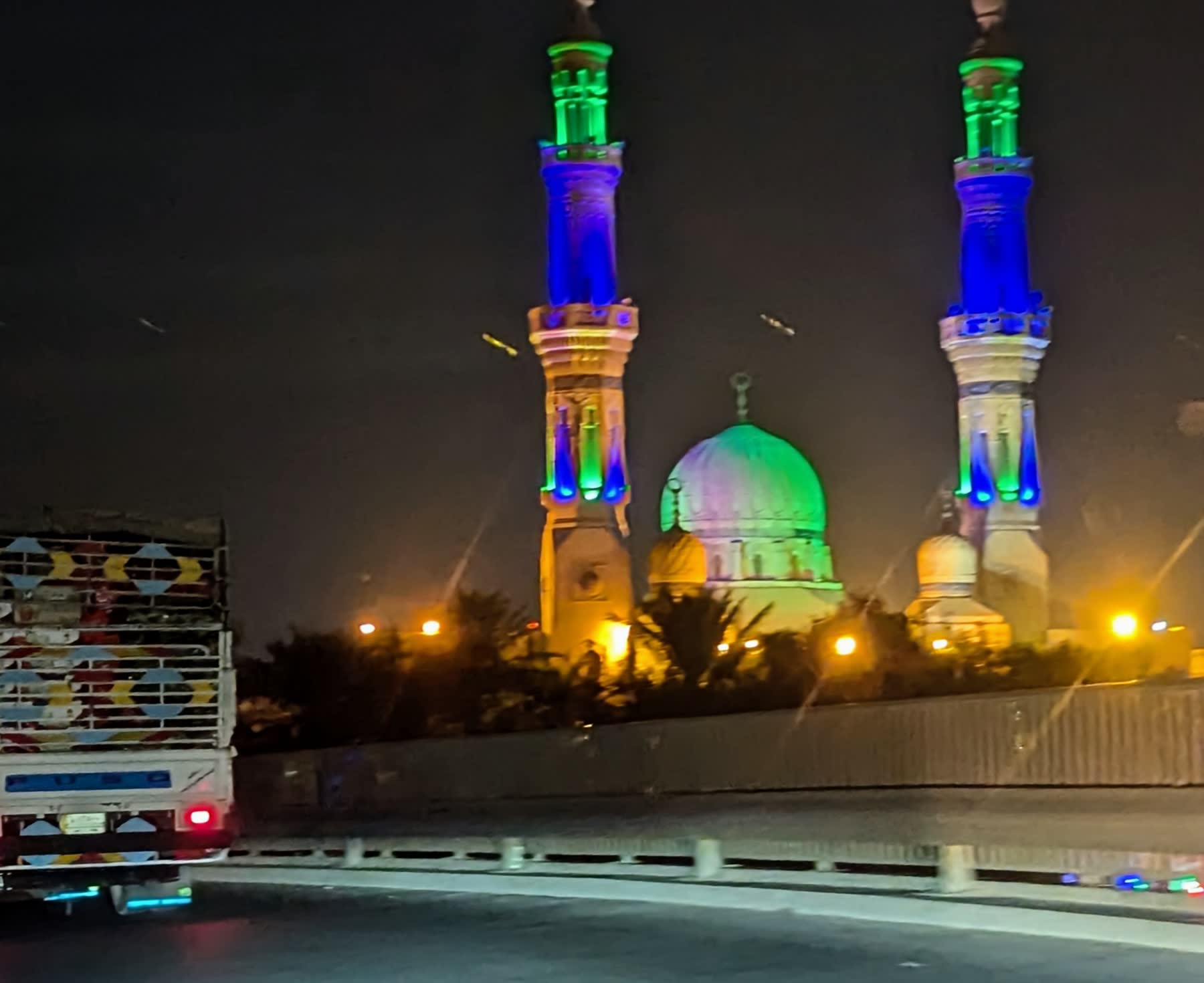
Views from the route, gathered from the 50 Difficult Places archive.
Video archive
Arba'een in motion
Clips from the route, gathered from the 50 Difficult Places archive.
Good to know
Arba'een FAQ
Honest answers, including the ones that might change your plans.
Can tourists visit Arba'een?
Tourism may be possible in parts of Arba'een, but conditions can change quickly. Check current government travel advisories, embassy guidance, local contacts, and recent traveller reports before booking.
What visa do you need for Arba'een?
Visa and permit rules vary by nationality and can change without much notice. Use this guide as a starting point, then confirm current requirements with official government, embassy, or consulate sources.
What is the best time to visit Arba'een?
The usual planning window is The 4 to 7 days before Arba'een day. Weather, access, holidays, security conditions, and transport schedules can still affect the final route.
How long do you need for Arba'een?
A realistic first plan is 5 to 8 days for Iraq only; 7 to 10 days with buffers. Add buffer days for permits, route changes, weather delays, and unreliable transport.